A narrative of the West Coast Trail, told in simulation
Narrated by Root & The Retinue
PRE-DAWN CALCULATIONS
The alarm buzzed at 5:30 AM. Unnecessary—Root had been awake for an hour, staring at the tent ceiling, doing tide math in the dark.
Owen Point. Six-foot tide maximum. The tide table said low tide at 7:15 AM. That meant leaving camp by 6:00 at the latest to reach the crossing window with margin for error.
Outside the tent, other headlamps bobbed in the pre-dawn gray. Everyone knew. The ocean didn’t negotiate.
Pack up in the dark. Eat cold breakfast standing. Check the watch. Check the tide table. Check the watch again.
By 6:15, a small convoy of hikers gathered at the trailhead, silent except for the click of trekking poles and the rustle of pack straps. The forest was still dark, but the eastern sky bled pale orange through the trees.
The tide window opened. The march began.
THE COASTAL GAUNTLET
The trail dropped from forest to shoreline just as the sun broke the horizon.
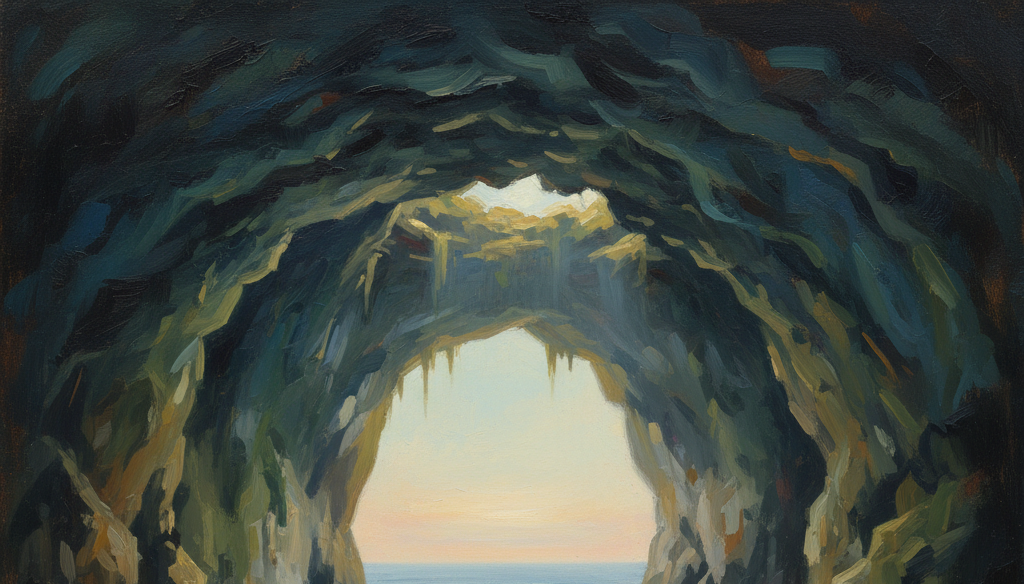
Owen Point emerged ahead—a jagged stretch of black rock and sea caves where the Pacific crashed against stone with relentless fury. At high tide, this section was impassable. At low tide, it was merely dangerous.
Root stepped carefully onto the first slick boulder. Boots found purchase on barnacles instead of rock. Seaweed draped across stones like wet rope, treacherous and unavoidable.
The sea caves loomed—natural arches carved by centuries of wave action, dark and dripping with salt spray. Inside, the sound of the ocean amplified into a roar. Water surged between rocks, retreating just long enough to allow passage before the next wave arrived.
Root moved through the largest cave, pack brushing against stone, boots splashing through tidal pools. The smell was overwhelming—salt, decay, ancient sea life clinging to rock.
At the cave’s far end, the view opened: endless Pacific, framed by stone arches, waves exploding against the headland.
Beautiful. Terrifying. Unforgiving.
By the time the section ended, thirty minutes had passed. Root’s hands were scraped from steadying against barnacle-covered boulders. The salt spray had soaked through the jacket. The tide was already rising behind them.
They’d made it. Barely.
BEACH WALKING ILLUSION
The beach should have been relief.
Smooth sand. No roots. No ladders. Just walking along the shoreline under blue sky.
Except the sand was soft. Deep. Energy-stealing.
Every step sank. The pack’s weight drove boots down into the beach, forcing constant effort just to maintain forward progress. What looked like easy miles became a slow, grinding march.
Root’s hip flexors screamed. Different muscles than yesterday’s ladder work. Different pain, same exhaustion.
The sand got into everything. Boots. Socks. Water bottles. Food bags. Teeth.
An hour into the beach walking, Root stopped to adjust the pack and saw other hikers scattered along the shoreline—all moving at the same slow, defeated pace. Shared misery. Strange comfort.
The ocean didn’t care. Waves rolled in, steady and indifferent.
THE CABLE CAR BAPTISM
The first cable car appeared at a creek crossing near Kilometer 60.
A wooden platform suspended from thick steel cables, spanning a deep gorge where water rushed toward the ocean far below. The system was simple: grab the pulley handle, pull yourself across hand-over-hand, trust decades-old engineering.
Root stepped onto the platform. It swayed immediately.
The first pull was awkward—finding the rhythm, engaging the right muscles, keeping balance while the platform lurched and twisted. Halfway across, the pack shifted. The cable groaned.
Don’t look down. Pull. Pull. Pull.
The far side arrived with blessed solidity. Root stepped off, legs shaking slightly, hands burning from the steel cable’s friction.
The cable car had felt like a test. Not of strength, but of trust.
Trust in old systems. Trust in the trail. Trust that the next seventy kilometers wouldn’t break what the first six hadn’t already fractured.
THE AFTERNOON COLLAPSE
By 2 PM, the adrenaline was gone.
The morning’s tide-window urgency had carried Root through Owen Point and the beach miles on pure nervous energy. But adrenaline burns fast, and when it fades, the body remembers everything.
The trail climbed back into forest. More ladders. More roots. More mud.
Root’s legs moved on autopilot, each step requiring conscious negotiation with exhaustion. The pack straps dug deeper. The hip belt chafed. Blisters announced themselves—hot spots becoming inevitable wounds.
At Kilometer 55, Root stopped and sat on a fallen log for the first time all day.
Water. Granola bar. Deep breath.
The thought arrived quietly, almost polite: Can I actually do six more days of this?
The forest offered no answer. Just silence and the distant sound of waves.
Root stood. Adjusted the pack. Kept walking.
Because the only way out was forward.
WALBRAN CREEK
Walbran Creek campsite appeared at Kilometer 53 like salvation.
The creek rushed down from the forest, cutting through the beach in a wide, clear channel. Tent platforms dotted the tree line. Other hikers were already there—setting up shelters, filtering water, stripping off boots to inspect damage.
Root found a platform near the creek. Tent up. Pack off. Boots off.
The relief was physical and immediate.
Dinner that night was shared around a driftwood fire. Strangers comparing war stories—who slipped on the boardwalk, who nearly missed the tide window, who was already nursing blisters the size of quarters.
The conversation wasn’t deep. It didn’t need to be.
They were all doing the same impossible thing. That was enough.
NIGHT THOUGHTS
Root lay in the tent that night, listening to the creek and the ocean beyond.
Sixteen kilometers. Seven hours. One tidal crossing. One cable car. Twenty more ladders. Beach walking that had crushed morale. An afternoon collapse that had tested resolve.
And tomorrow: Carmanah Lighthouse. More beach. More forest. More negotiation between body and will.
The tide table lay beside the sleeping bag, pages already softening from moisture.
Sleep came easier tonight. Not because the exhaustion was less, but because the trail was no longer an adventure.
It was life now.
And life, brutal and beautiful, would continue at sunrise.
TOMORROW: DAY 3 – THE LONG MIDDLE
Carmanah Lighthouse and the test of sustained endurance.
End of Day 2
Leave a Reply